



Os extintores são obrigatórios?
Fire extinguishers: are they mandatory or recommended?
Fire extinguishers were developed to combat uncontrolled fires. Any type of fire that gets out of control is dangerous and should be extinguished, preferably with the use of an extinguisher. The need for an extinguisher can vary, being recommended for homes and cars and mandatory for commercial establishments. Regardless of the legal obligation, it is always sensible to have them, as fire is extremely destructive and can be fatal if not controlled.
Fire is one of humanity's oldest enemies, and controlling a fire can be very difficult. However, it is possible to combat it. The duration of the fire will determine the extent of the damage, so it is crucial to have a good fire suppression system. Extinguishers play a vital role in fighting fire, helping to save lives and property.
Should I have a fire extinguisher at home or in my business?
-
At Home: For a residence, it is highly recommended to own a fire extinguisher. Spray-type extinguishers, such as Extpray, are easy to handle and ideal for home use.
-
In Businesses: For a business, it is mandatory to have fire extinguishers. All commercial establishments must include a safety plan that includes extinguishers, with a minimum of one 6 kg dry powder extinguisher and one 2 kg CO2 extinguisher for the electrical panel.
Regulations
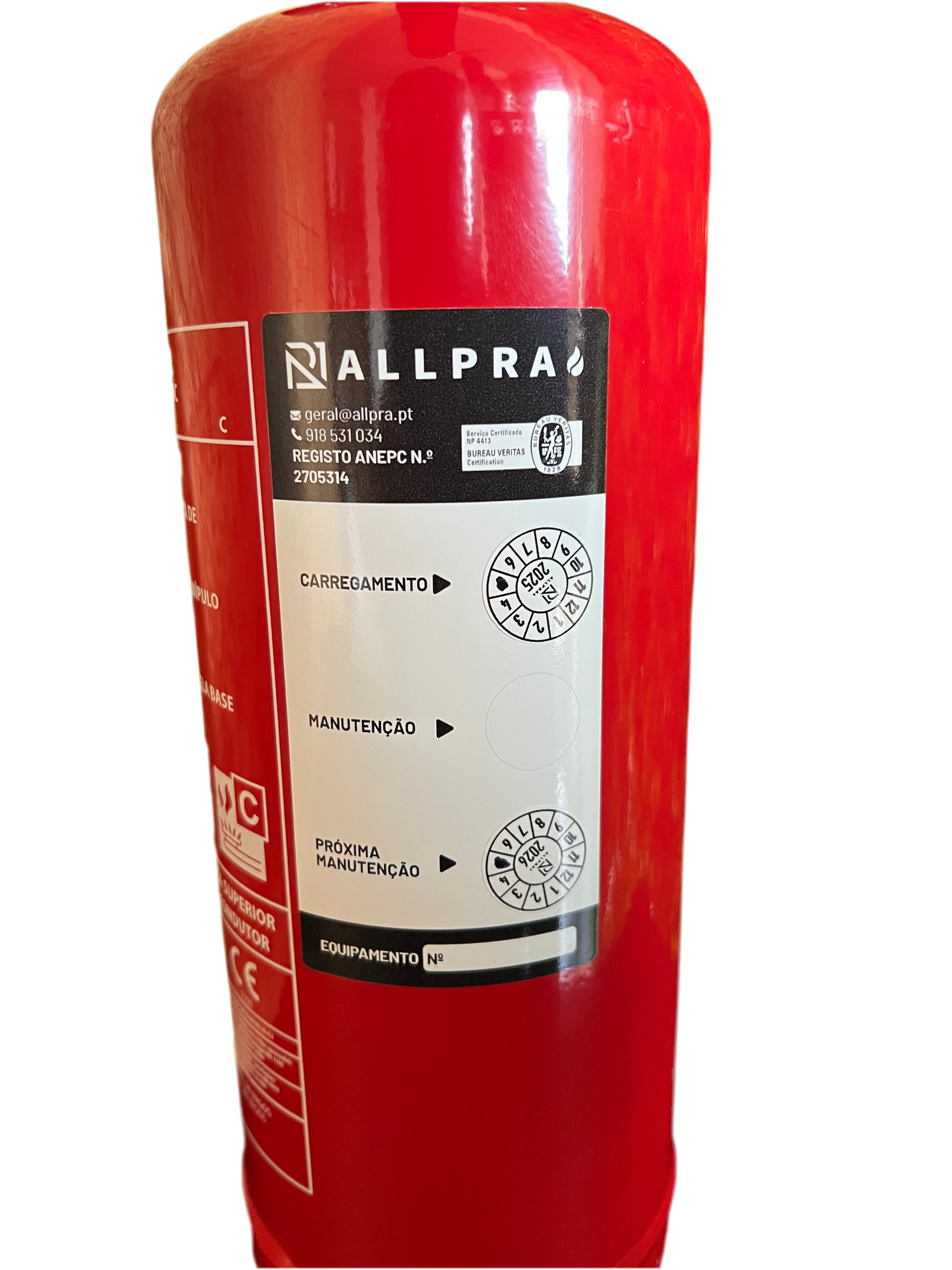
In businesses, it is mandatory to comply with Decree-Law no. 220/2008 of 12 November, which establishes the Legal Regime for Fire Safety in Buildings. The maintenance of extinguishers must follow Portuguese regulation NP4413.
Placement and location of extinguishers
Extinguishers should be placed so that the maximum distance between them does not exceed 15 metres. For example, for a 100m² room, it is common to have two 6 kg dry powder or 6 kg foam extinguishers, in addition to a 2 kg CO2 extinguisher for the electrical panel.
Do I need to take a course to use fire extinguishers?
It is not mandatory to take a course to use fire extinguishers, although it may be required in businesses as part of Occupational Risk Protection. Courses are available for those interested in learning more about fire fighting.
Fire prevention
Prevention is always the best strategy. It is essential to have the best tools and knowledge to put out a fire, whether at home or at work. This can save lives and protect your property.
Saiba qual extintor escolher!
Find the ideal extinguisher for your space and learn how to use it safely
Fire extinguishers are active fire protection equipment, essential to prevent small fires from turning into major catastrophes. Although they are not intended to combat large-scale fires, they are effective in preventing an initial fire from spreading.
History of Fire Extinguishers
The first records of fire extinguishers date back to 1723. Since then, they have evolved to become fundamental in fire protection, providing a first line of defense in emergency situations.
Types of Fire Extinguishers and Their Applications
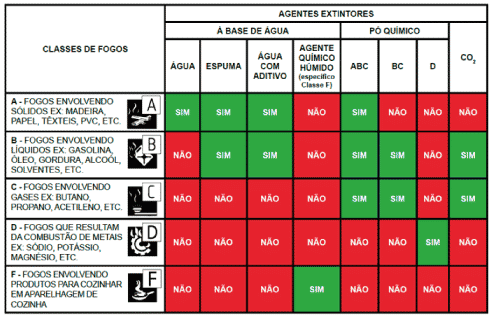
The choice of the appropriate extinguisher should be based on the specific risk of the location and the type of combustible material present. Each fire class requires a specific type of extinguisher:
CLASS A
Indicated for fires involving solid materials of organic nature, such as wood, paper, coal, or textiles. The recommended extinguishers are:
- Water-based extinguishers
- Foam extinguishers
- ABC dry chemical powder extinguishers
- Hydrofluorocarbon extinguishers
CLASS B
For fires in flammable liquids, use:
- Foam extinguishers
- Water with additive extinguishers
- BC or ABC dry chemical powder extinguishers
- Carbon dioxide extinguishers
- Hydrofluorocarbon (HFC) extinguishers
CLASS C
Fires involving flammable gases require:
- BC or ABC dry chemical powder extinguishers
- Hydrofluorocarbon (HFC) extinguishers
CLASS D
Fires involving light metals, such as sodium, potassium, aluminum, magnesium, or lithium, require:
- Class D dry chemical extinguishers (check compatibility with the specific metal)
CLASS F
For fires involving cooking oils and fats, the suitable extinguishers are:
- Wet chemical extinguishers (solution of water and potassium acetate, which turns oils and fats into a soapy substance)
Safety in the Use of Extinguishers
Remember that extinguishers have a limited charge and can run out in seconds. Therefore, it is essential to know how to use them correctly. If in doubt, it is recommended to take specific training courses on the use of fire extinguishers.
Prevention and Safety
Prevention is always the best defense against fires. Equipping your space with the appropriate extinguishers and ensuring that everyone knows how to use them is essential for everyone's safety. Don't wait for an emergency to prepare – invest in the protection of your space today.
For more information and to purchase the ideal extinguisher for your space, visit ExtintoresOnline.pt and contact our ANEPC certified team.
Significado NP4413

NP 4413 is an essential standard for ensuring fire safety in Portugal. It establishes the requirements for the maintenance of fire extinguishers, ensuring that these pieces of equipment are always in perfect working order.
Complying with NP 4413 is crucial for:
- Ensuring Efficiency: Well-maintained extinguishers are more effective in preventing and fighting fires.
- Complying with the Law: Companies that follow the standard avoid fines and legal sanctions.
- Protecting Lives and Property: Proper maintenance of extinguishers can save lives and minimize material damage in the event of a fire.
In summary, NP 4413 is vital for the safety and protection of everyone.
SCIE o que é?
Fire Safety in Buildings (SCIE) is a set of measures and regulations designed to ensure the protection of people and property against fires in buildings. In Portugal, SCIE is governed by Decree-Law No. 220/2008, which establishes the technical and organisational requirements necessary to prevent and combat fires.
SCIE covers:
- Prevention: Implementation of measures that reduce the risk of fire.
- Passive Protection: Use of materials and construction techniques that slow down the spread of fire.
- Active Protection: Installation of fire detection, alarm and suppression systems, such as extinguishers and sprinklers.
- Training and Simulation: Regular training of occupants and conducting evacuation drills.
Complying with SCIE regulations is fundamental to ensuring the safety of everyone who uses a building, guaranteeing that, in the event of a fire, appropriate measures are in place to minimise risks and damage.
